Advancing Clean Cooking Solutions through Carbon Finance
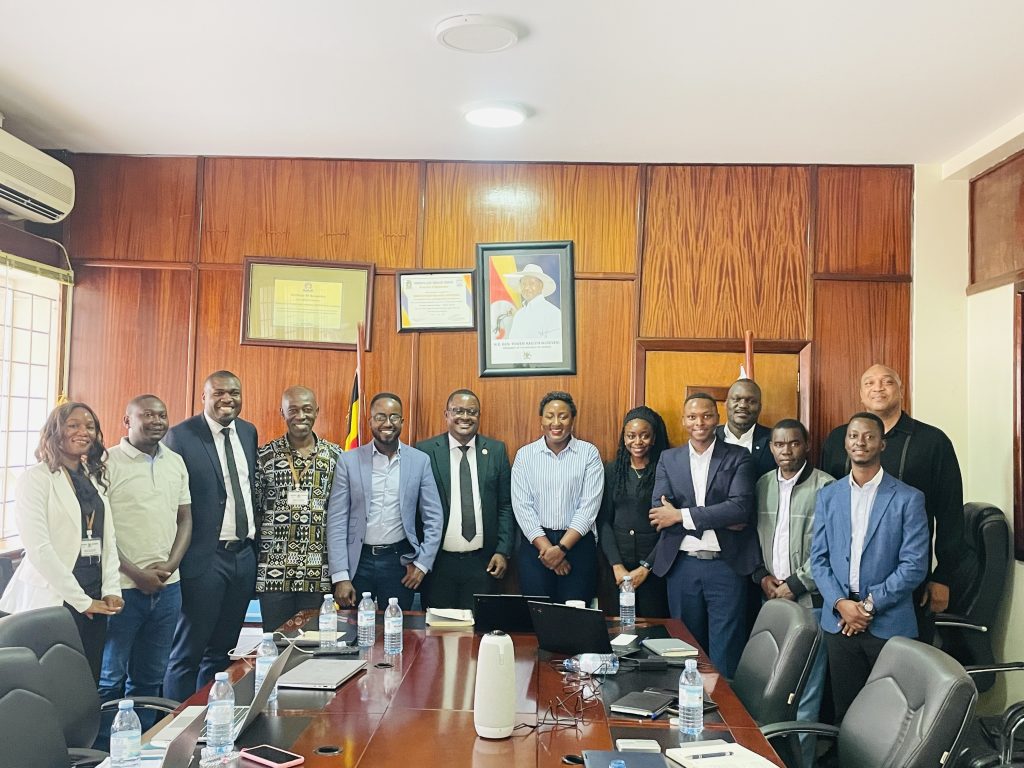
Kampala, Uganda. The Government of Uganda, through the Ministry of Energy and Mineral Development (MEMD), is developing a National Clean Cooking Carbon Financing Framework and Programme aimed at accelerating the transition from traditional biomass-based cooking to clean, modern cooking solutions. The framework is being established through the Clean Cooking Unit of the Ministry. The Unit held a stakeholder consultation with key partners in the sector including the Private Sector, relevant Ministries, Departments and Agencies, Development Partners. The framework is being designed to unlock carbon finance at scale, lower the cost of clean cooking technologies, and strengthen Uganda’s contribution to global climate action while delivering tangible health, economic, and environmental benefits.
Why a National Carbon Framework for Clean Cooking?
Uganda’s cooking sector remains a significant source of greenhouse gas emissions and household air pollution, with the majority of households and institutions still reliant on firewood and charcoal. Under Uganda’s Nationally Determined Contributions (NDCs), the cooking sector is expected to contribute an estimated 6.8 million tonnes of greenhouse gas emission reductions, targeting both households and institutions such as schools, hospitals, and prisons.
The National Clean Cooking Carbon Financing Framework seeks to address long-standing challenges that have limited access to carbon finance in the sector, particularly for small and medium-sized enterprises (SMEs) and public programmes, by providing a coordinated, standardized, and government-backed approach.
A Programme-of-Activities Approach
At the core of the framework is a national Programme of Activities (PoA) led by MEMD, under which multiple clean cooking technologies will be organized as Voluntary Project Activities (VPAs). These include the six value chains i.e. electric cooking, biogas, LPG, ethanol, pellets and briquettes, and sustainable charcoal and firewood.
By aggregating projects under a single national PoA, participating developers, especially local SMEs can reduce transaction and registration costs by up to 40 percent, making carbon finance more accessible and commercially viable.
Digital Monitoring, Reporting and Verification (D-MRV)
A key innovation of the framework is the adoption of a Digital Monitoring, Reporting and Verification (D-MRV) system. Using technologies such as smart meters, flow meters, and combustion sensors, the system enables real-time tracking of stove usage, energy consumption, and emissions reductions across different fuels.
Linking Carbon Finance to Affordability
Carbon revenues generated through the framework are expected to play a transformative role in improving affordability, including reducing upfront costs, supporting Pay-As-You-Go models, and providing targeted user incentives.
Looking Ahead
While the current focus is clean cooking, the National Carbon Framework has been designed with scalability in mind, allowing future expansion to other energy and climate-related sectors.
Contact
+256414311232/ ccu@energy.go.ug