The Clean Cooking Unit Hosts a Delegation from the Republic of Rwanda
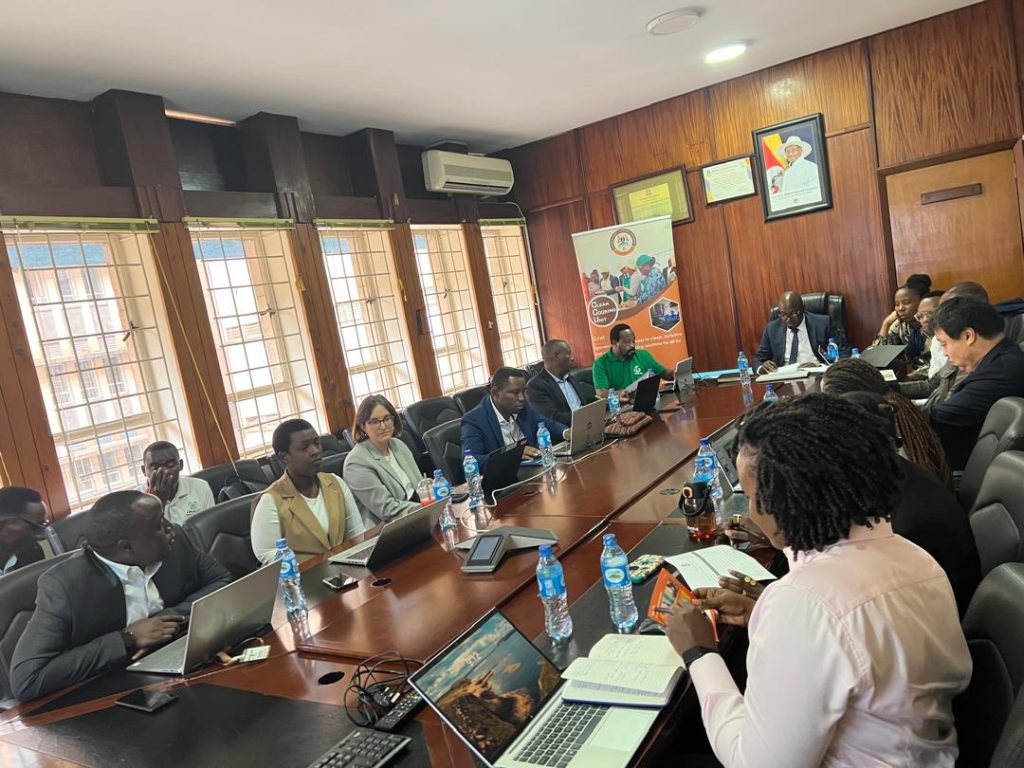
The Clean Cooking Unit, with support from GIZ Endev held a round table discussion on clean cooking, with a delegation from Rwanda on 2nd September, 2025 at the Ministry Headquarters in Kampala. The Rwandese delegation was comprised of the Ministry of Infrastructure, Rwanda Energy Group, Development Bank of Rwanda and Rwanda Standards Body while the Ugandan counterparts included the Clean Cooking Unit, Energy Resources Department and the Uganda Energy Credit Capitalization Company (UECCC).
The meeting discussed experiences with ongoing clean cooking projects in the two neighboring states. The discussions focused on the following aspects:
a) Sustainability of clean cooking markets amidst the many subsidy programs by state and non-state actors. Both countries shared in the losses and gains from the design of the different subsidy programs and their likely effect on the sector. Key issues raised included; Difficulty in ensuring that the target beneficiaries are the ones who benefit from the subsidies; Limited capacity of companies to qualify for the subsidy programs, which consequently distorts the market as a few (qualified) make sales due to subsidized products; Market distortion from companies whose products are subsidized through carbon credits, as most distribute the stoves at no cost.
b) Implementation of the e-cooking tariff: the Ugandan team shared experiences with the e-cooking tariff, where it was reported that through a pilot conducted by the Utility company, UEDCL/ UMEME, majority of the beneficiaries were able to benefit from the tariff, however, it was noted that more awareness was required to facilitate uptake of the tariff. A restructuring of the tariff was also recommended so as to cater for all segments of the public.
c) Local manufacture and assembly of stoves: Both counterpart countries reported that whereas they have prioritized support towards locally manufactured clean cooking fuels and technologies, majority of the locally manufactured stoves do no meet the required standards and therefore cannot qualify for available financing. More support in technical capacity building to manufacture high quality stoves through retrofits and modifications in company production lines was called for.
d) Capacity of testing laboratories: Both countries reported the rising demand for testing services due to strengthened enforcement of regulations, increased demands from funders of different interventions and rising consumer awareness and demand for quality and durable stoves. Capacity for testing some parameters, especially emissions was highlighted by the Ugandan team while the Rwandese counterparts cited issues of rising backlog as labs are overwhelmed with requests for testing services.
The teams identified areas of collaboration and improvement setting up regional testing facilities, regional fuel hubs and storage terminals for bioethanol, and the need to devise strategies to make clean cooking more aspirational.
One thought on “The Clean Cooking Unit Hosts a Delegation from the Republic of Rwanda”